
Quick answer: sort the belongings before replacing labels
Make three groups:
- Continuing: personal belongings the new school has agreed can be used.
- Keeping as records: completed notebooks, reports and materials you are retaining from the previous school.
- Returning: library books, loaned equipment and other property belonging to the old school.
Then separate confirmed details from pending ones. This prevents an old class or school name from travelling into the new routine while preserving information that still belongs on a historical record.
On this page
- Quick answer: sort the belongings before replacing labels
- Use a transition sheet: confirmed, pending and retained
- 1. Confirm which old books can continue
- 2. Preserve the context of old-school records
- 3. Bridge the period when details are still pending
- 4. Give each continuing item one clear current identity
- 5. Check the new routine after the first days
- Ordering Dimple Name Slips during a school change
- Mistakes that create extra work
- Frequently asked questions
- Prepare the continuing items once the details are settled
When a child changes schools mid-year, update labels on belongings that will continue to the new school using confirmed new details. Keep old-school records identifiable, return borrowed property, and avoid printing a new section or roll number before it is assigned.
You do not need to relabel everything simply because the school has changed. The useful question is: where will this item be used next?
Use a transition sheet: confirmed, pending and retained
A mid-year move can involve two sets of instructions at once. Put them on one page:
| Detail | Confirmed for the new school? | What to do before printing |
|---|---|---|
| Child's school-use name | Check the new record | Use the agreed spelling and form |
| Class or grade | Confirm with the school | Do not infer from the previous class alone |
| Section or division | May be pending | Wait for assignment or ask for a temporary format |
| Roll number | May be pending | Use only the newly assigned number |
| School name | Confirm the requested wording | Check whether it needs to appear on belongings |
| Subject or book purpose | Compare the new book list | Confirm which existing books may continue |
This is a preparation worksheet, not an admission requirement. The new school's instructions decide the final format.
1. Confirm which old books can continue
The new school may use different textbooks, notebook rulings, subject divisions or cover instructions. Check before covering and relabelling a stack of books.
A partly used personal notebook might be suitable for rough work at home but unsuitable for the new class. A textbook may have the right subject name but the wrong edition. A school diary may belong to the previous school's record system.
Keep these decisions separate from the condition of the label. A readable label does not make the book suitable for the new school.
For example, imagine a family has seven old notebooks. The new school agrees that two can continue, three will remain at home, and two contain completed work to keep. The label decision follows those uses; it does not automatically require seven replacements.
2. Preserve the context of old-school records
A completed notebook can correctly show the old school, class and section. That information helps identify when and where the work was completed.
There is usually no reason to change a historical notebook so it appears to have been used at the new school. Keep it with the other records, following any instructions the schools give for transferring work.
Do not replace ownership labels, asset tags or library identifiers on borrowed property. Return it through the old school's process and keep any acknowledgement you receive.
3. Bridge the period when details are still pending
If the new section or roll number has not been confirmed, avoid guessing just to finish the labels.
Ask the school what it wants for the first few days. It may accept a temporary name-and-class format or provide its own instructions. Use that answer rather than carrying forward an old roll number that could identify a different pupil in the new class.
This is also a reason to delay ordering a fully detailed set when important fields remain unsettled. A preview can show the details you supplied; it cannot confirm school records for you.
4. Give each continuing item one clear current identity
For belongings moving with the child, check whether old school information could cause confusion. A bottle or pencil box returned to the wrong school office is a different problem from a completed notebook stored at home.
Aim for one clear current identity on items in daily use. If an old label needs changing, follow the item's care instructions and the label supplier's guidance. Do not assume it can be peeled off cleanly or recommend heat, solvents or scraping without verified compatibility.
If an old label cannot be removed safely, ask about a suitable way to make the current identification unambiguous. Avoid leaving two equally prominent sets of school details competing for attention.
5. Check the new routine after the first days
Once the teacher confirms the everyday arrangements, compare the belongings with the new timetable and book list.
Check the class, section, roll number, subject names and any books that were initially kept aside. Correct the information that has changed; keep the details that remain accurate.
The existing new-school-year label checklist handles the broader annual audit. A mid-year transfer adds the need to manage old-school records and new-school instructions at the same time.
Ordering Dimple Name Slips during a school change
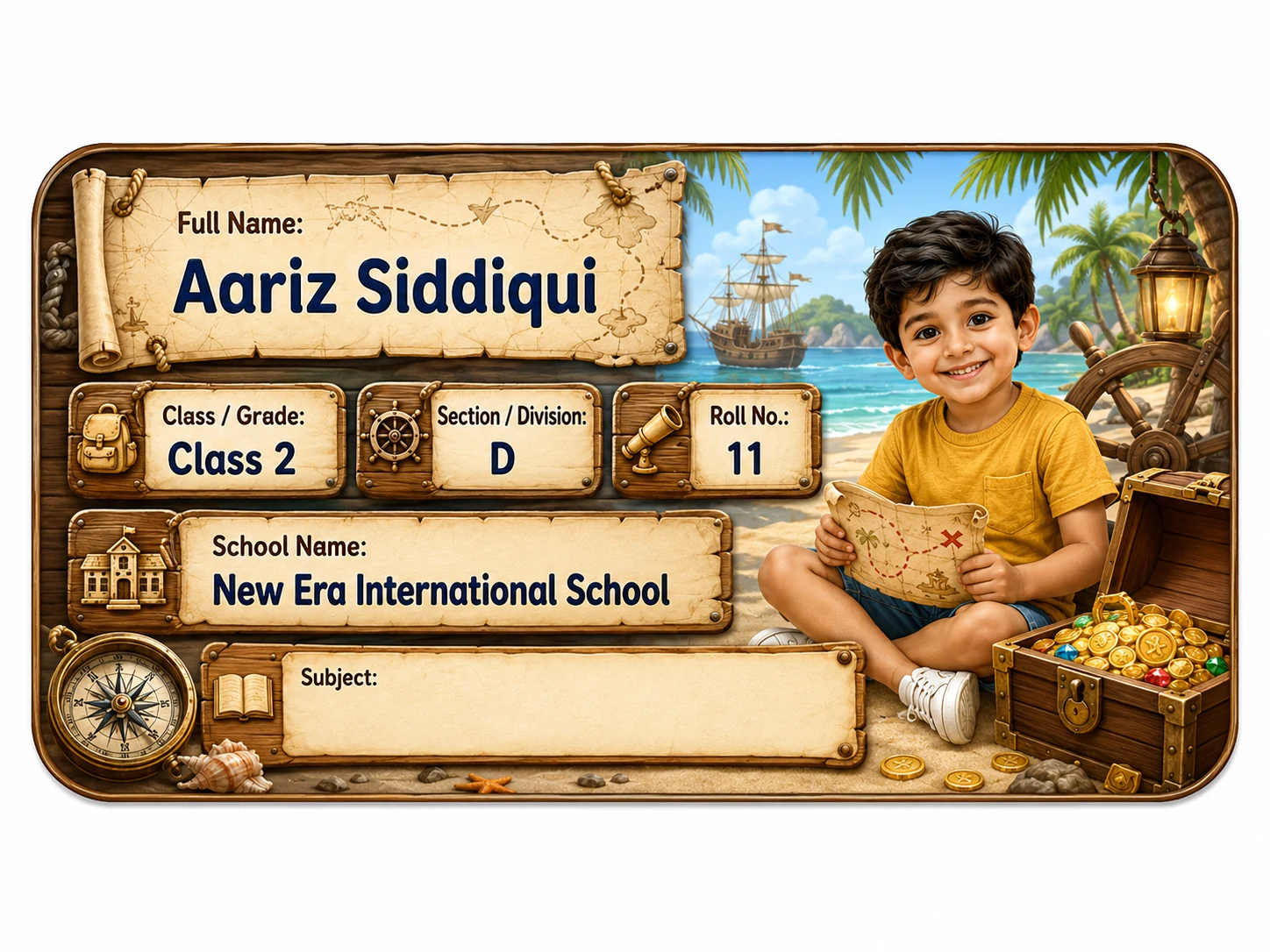
Dimple's current Name Slips use one child, one selected design and the same school-details set across a printed sheet. Confirm the new details before ordering that set.
If you already have unused slips carrying the old school or roll number, judge them by their intended use. They may remain accurate for old-school records, but they should not create confusion on belongings sent to the new school. Do not assume existing printed details can be erased or edited.
Use the school-information guide to decide which fields are necessary and the quantity worksheet to count only the items you actually need to prepare.
Mistakes that create extra work
Copying the old roll number. A familiar number may be wrong in the new school.
Relabelling archived work as current work. Keeping its original context can be more useful.
Ordering before the new book list is clear. The school may ask for different materials or labelling conventions.
Replacing every label automatically. Some information and some belongings may remain unchanged.
Frequently asked questions
Should I order new Name Slips as soon as admission is confirmed?
Wait until the details you intend to print are confirmed. If some fields are pending, ask the school what it wants on the initial belongings.
Can my child use the same photo and design?
A school change does not automatically require a new photo or theme. Check the new school's requirements and whether the photo still represents the child clearly.
Should I remove the old school's name from completed notebooks?
Keep historical work identifiable unless the school asks for a particular change. Focus current identification on the items that will continue in everyday use.
Can one Dimple sheet contain both old-school and new-school details?
The current format uses the same selected details across one child's sheet. Do not assume a split-details sheet is available; confirm any special requirement with Dimple first.